The National Insurance Act 1911 Part I, effective 15 July 1912, established compulsory health insurance for some 13 million workers. Insurance was paid by contributions from the employee and employer, and subsidised by the government. The employee+employer contributions were paid by stamps affixed weekly to contribution cards, although arrangements could be made by larger employers to affix high-value stamps quarterly, half-yearly, or annually. The amount of the weekly contribution depended on the Class of the employee, initially as in the simplified table below, with lower rates in Ireland. There were variations on the rates for juveniles, low-earners, mariners, and outworkers: A(J), A(L), A(M), A(O), etc.
| Class | Description | GB | Ireland |
|---|---|---|---|
| A | Man, employed | 7d | 5½d |
| B | Man, army | 3d | 3d |
| C | Man, voluntary under 45 | 7d | 5½d |
| D | Man, voluntary 45 and up | 9d-1/5 | 7d-1/2 |
| E | Woman, employed | 6d | 4½d |
| F | Woman, voluntary under 45 | 6d | 4½d |
| G | Woman, voluntary 45 and up | 8d-1/3 | 6d-1/- |
| H | Woman, married | 3d | 1½d |
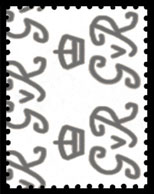
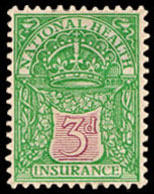
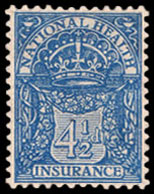
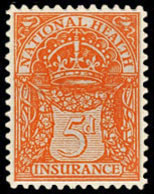
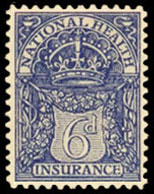
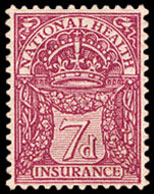
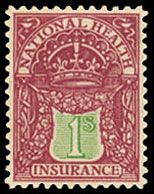
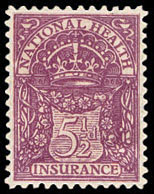
In December 1912, the most used values of National Health Insurance stamps, Classes A and E, were issued in rolls (suitable for use with affixing machines). These were in England, Wales, and Scotland: men 7d, women 6d; and in Ireland: men 5½d, women 4½d.
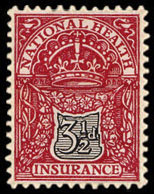
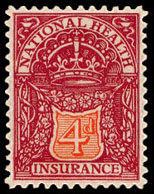
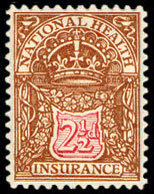
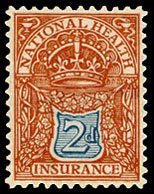
* Low earner: for employees earning 2s or less per day, Parliament subsidised 1d.
† Sick leave: employer paid wages during the first 6 weeks of sickness, Society paid no benefit.
Voluntary Contributors supplementary rates (1d to 2½d) and full rates according to age at entry.
suppl.
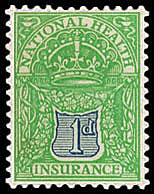
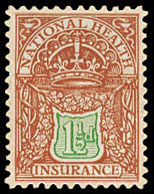
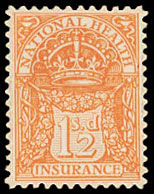
High Values were available to large organisations for the most used rates in multiples of 10 and 13 weeks. They were printed in bright red to distinguish them from single rate stamps. Initial printings of 6/6 and 7/7 stamps were on Multiple Cypher watermark paper, the rest were on Simple NHI.
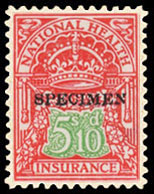
10x 7d
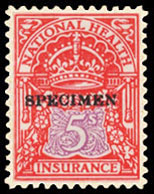
10x 6d
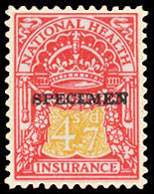
10x 5½d
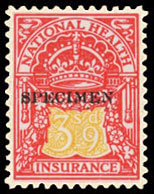
10x 4½d
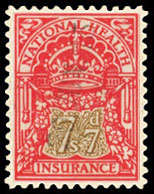
13x 7d
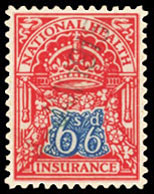
13x 6d
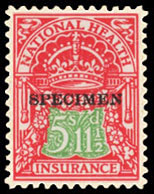
13x 5½d
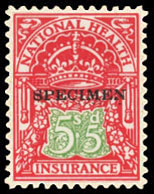
13x 5d
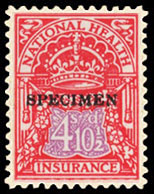
13x 4½d
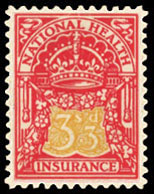
13x 3d
(O/P) *
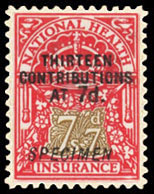
13x 7d
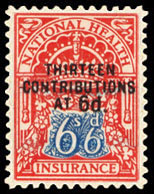
13x 6d
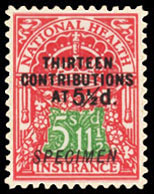
13x 5½d
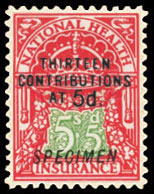
13x 5d
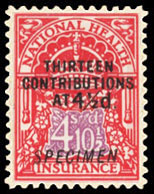
13x 4½d
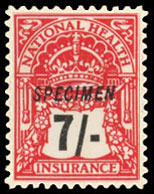
12x 7d
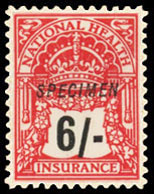
12x 6d
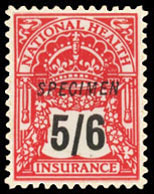
12x 5½d
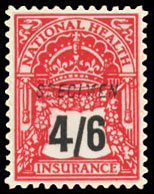
12x 4½d
* Overprinted “Thirteen Contributions at 7d” etc, in black.
† Provisional issue for a 12-week “short quarter” in spring of 1914. Only in use for one week.
July 1920 Issue
The National Health Insurance Act 1920, effective 5 July 1920, increased the basic rates to 7d, 8d, 9d, and 10d. Some rates were simplified or eliminated, the Parliamentary 1d subsidy for low earners was discontinued. The stamps were redrawn to improve clarity with coloured numerals on a white background for single rate stamps.
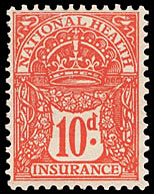
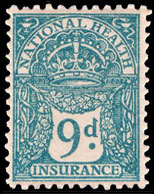
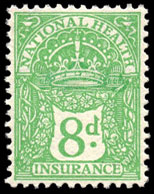
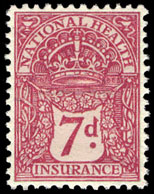
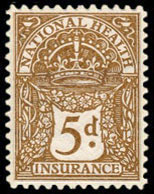
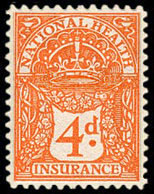
Cancelling Arrears on health insurance was the primarily use for 6d and 1/- stamps.
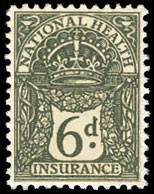
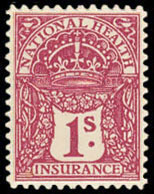
High Values were available to large organisations for the most used rates in multiples of 2, 10, and 13 weeks. They were printed with white numerals on a solid colour background.
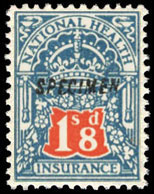
2x 10d
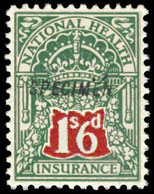
2x 9d
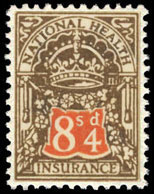
10x 10d
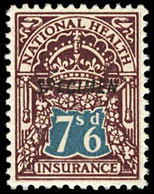
10x 9d
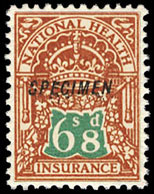
10x 8d
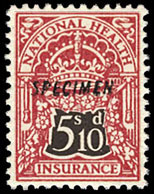
10x 7d
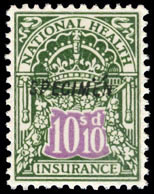
13x 10d
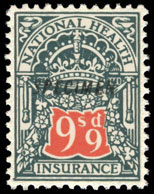
13x 9d
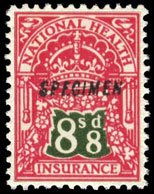
13x 8d
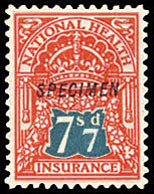
13x 7d
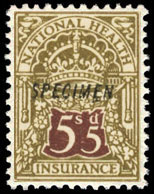
13x 5d
(O/P) *
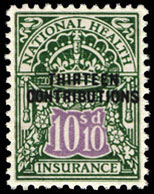
13x 10d
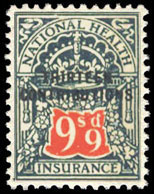
13x 9d
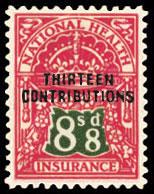
13x 8d
13x 7d
* Overprinted “Thirteen Contributions” in black.
The last page of file PIN 10/5 “superseded on 4 Jan 1926” has an overprinted 7/7 with brown value tablet from 1912, instead of a blue value tablet from 1920, implying the older stamp remained in use during this issue.
Next: Health & Pensions