National Health Insurance stamps were replaced by Health & Pensions stamps in 1926. A combined program for health insurance and old-age pensions was establish by the Widows’, Orphans’ and Old Age Contributory Pensions Act 1925, effective 4 Jan 1926. At introduction, contributions under both health and unemployment insurance were lowered, bringing the ordinary weekly rate for combined contributions to 1/6 for men (health 9d + pension 9d) and 1/1 for women (health 8½d + pension 4½d). Section 43 of the Act provided for an increase in the contributions for pensions during the decennial periods commencing 1 Jan 1936, 1 Jan 1946, and 1 Jan 1956, of 2d for men and 1d for women, bringing the combined contributions for 1936 to 1/8 and 1/2.
January 1926 Issue
Rates for contributors age 65 or over were added on 2 Jan 1928.
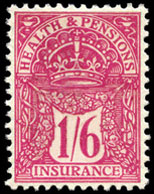
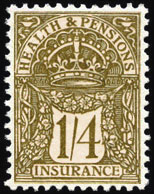
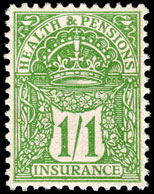
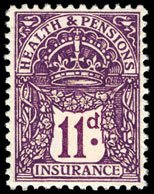
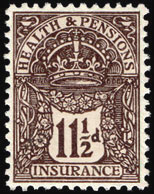
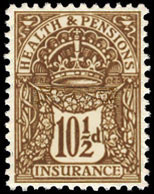
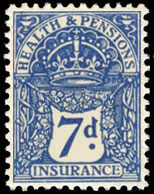
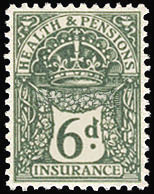
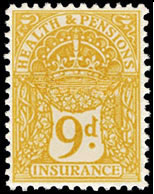
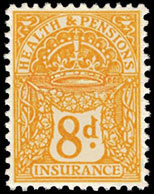
Mercantile Marine rates were 2d less than ordinary rates, 1d less in Northern Ireland (for NI residents who were not members of a Seamen’s Society). UK and Exempt rates were reduced by a halfpenny on 1 Jan 1927 and an old design 4½d stamp was put back into use.
Male
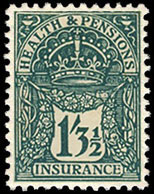
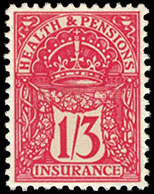
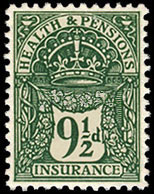
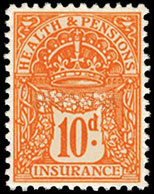
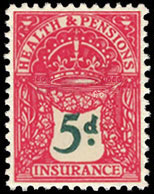
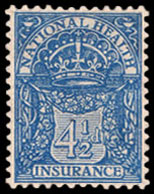
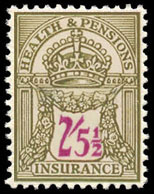
High Values were available to large organisations for the most used rates in multiples of 2, 8, and 13 weeks. They were printed in two colours to distinguish them from single rate stamps.
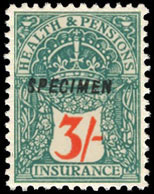
2x 1/6
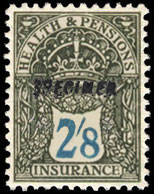
2x 1/4
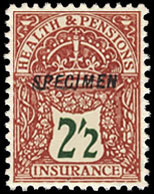
2x 1/1
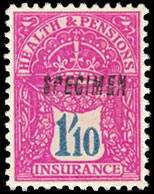
2x 11d
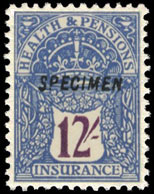
8x 1/6
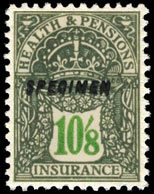
8x 1/4
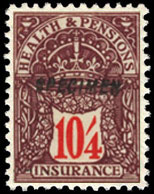
8x 1/3½
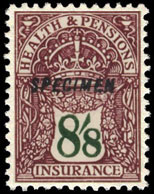
8x 1/1
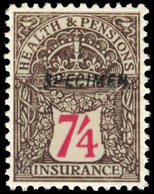
8x 11d
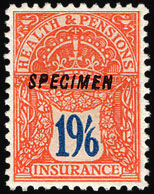
13x 1/6
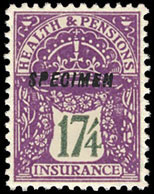
13x 1/4
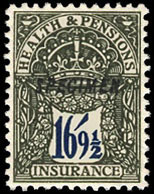
13x 1/3½
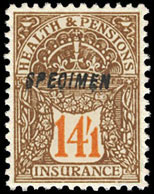
13x 1/1
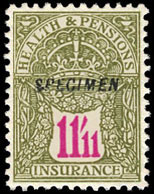
13x 11d
(O/P) *
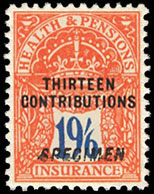
13x 1/6
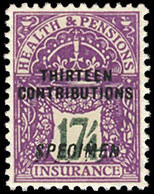
13x 1/4
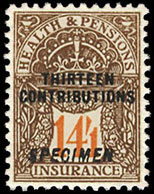
13x 1/1
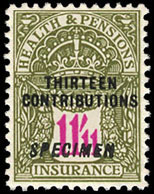
13x 11d
(Exempt)
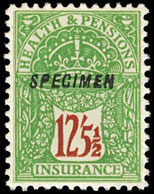
13x 11½d
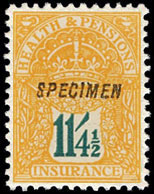
13x 10½d
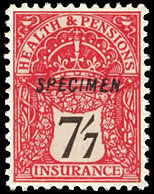
13x 7d
* Overprinted “Thirteen Contributions” in black.
June 1928 Issue
A cleaner design eliminated the scallop-shell behind the crown and snakes from the upper spandrels, among other changes. Since rates were unchanged, the new stamps were introduced as stocks of the earlier design ran out, starting from June 1928. Rates for N. Ireland were applicable to 6 July 1930 only, British rates applied in N. Ireland from 7 July 1930.
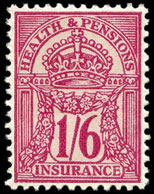
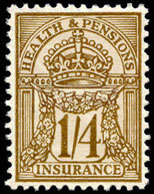
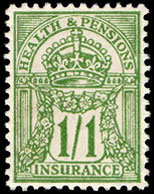
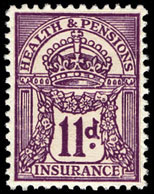
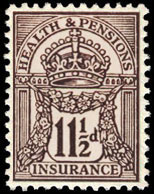
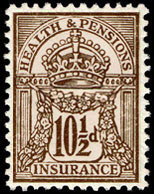
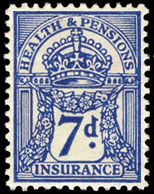
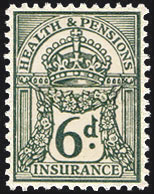
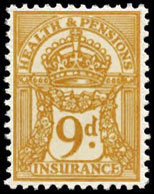
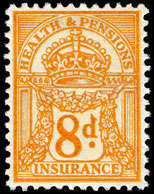
2 weeks
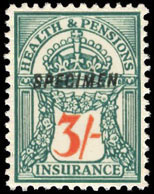
2x 1/6
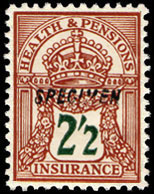
2x 1/1
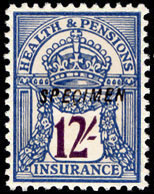
8x 1/6
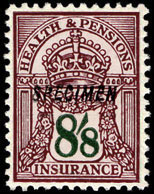
8x 1/1
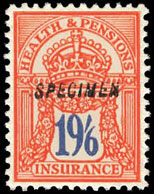
13x 1/6
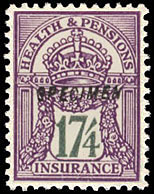
13x 1/4
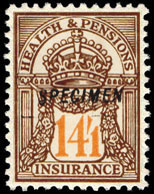
13x 1/1
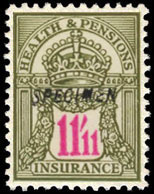
13x 11d
(65+)
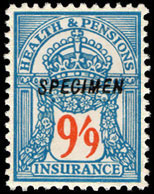
13x 9d
13x 8d
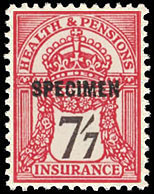
13x 7d
January 1936 Issue
Section 43 of the Widows’, Orphans’ and Old Age Contributory Pensions Act 1925 provided for an increase during the decennial period commencing 1 Jan 1936 of 2d for men (health 9d + pension 11d) and 1d for women (health 8½d + pension 5½d). The National Health Insurance (Juvenile Contributors and Young Persons) Act 1937, effective 4 Apr 1938, added benefits for juveniles 14 or 15.
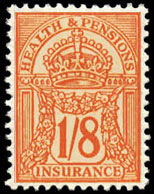
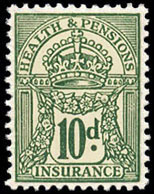
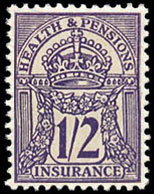
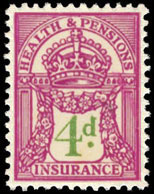
2 weeks
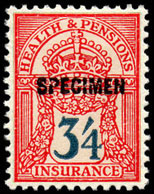
2x 1/8
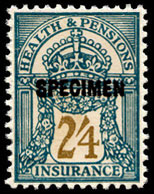
2x 1/2
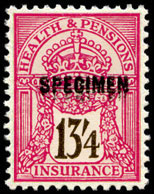
8x 1/8
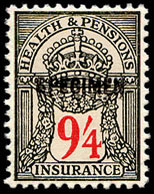
8x 1/2
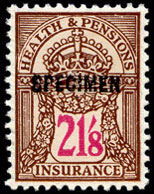
13x 1/8
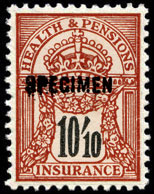
13x 10d
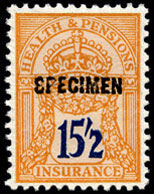
13x 1/2
13x 7d
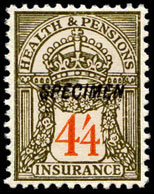
13x 4d
July 1940 Issue
The Old Age and Widows’ Pensions Act 1940, effective 1 July 1940, reduced the retirement age for women from 65 to 60 and increased the contributions for pensions by 2d for men and 3d for women, bringing the combined contributions to 1/10 and 1/5.
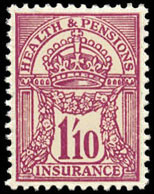
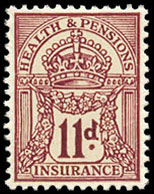
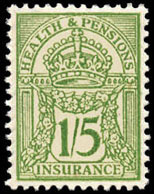
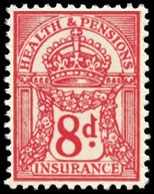
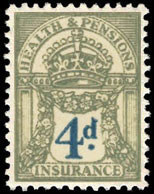
2 weeks
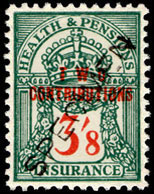
2x 1/10
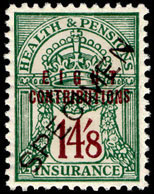
8x 1/10
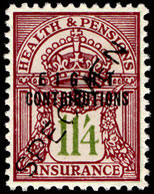
8x 1/5
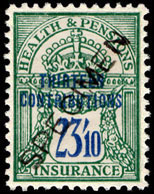
13x 1/10
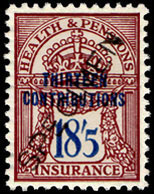
13x 1/5
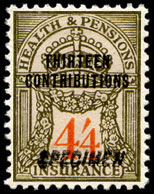
13x 4d
January 1942 Issue
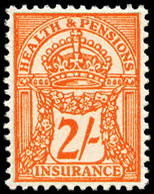
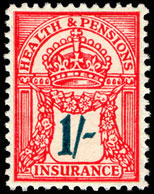
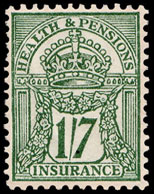
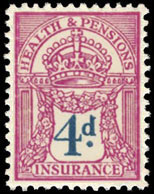
The Contributory Pensions and Workmen’s Compensation Act 1941, effective 5 Jan 1942, increased the contributions for health by 2d, bringing the combined contributions to 2/- for men (health 11d + pension 1/1) and 1/7 for women (health 10½d + pension 8½d). The 4d stamp changed colour on 2 July 1944.
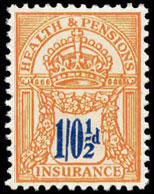
2 weeks
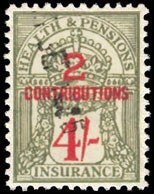
2x 2/-
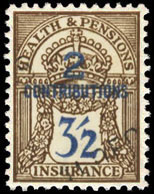
2x 1/7
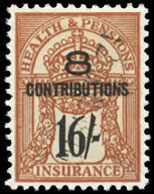
8x 2/-
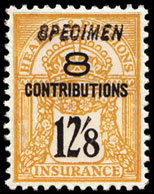
8x 1/7
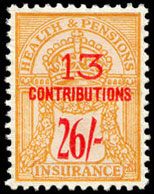
13x 2/-
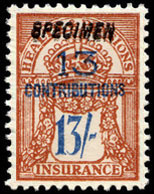
13x 1/-
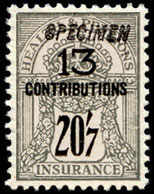
13x 1/7
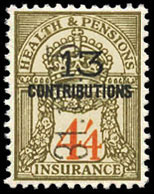
13x 4d
January 1946 Issue
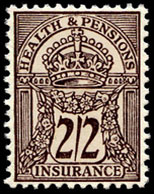
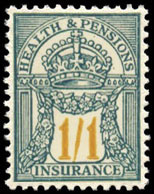
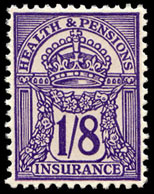
The decennial increase from the 1925 Act was applied on 1 Jan 1946 bringing basic contributions to 2/2 and 1/8. The use of a 1/1 stamp for a Man 65 or over, and the use of a 10d stamp for a Woman 60 or over, are both omitted from file PIN 10/6.
2 weeks
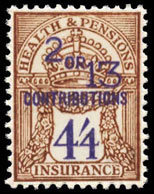
2x 2/2
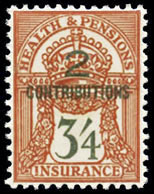
2x 1/8
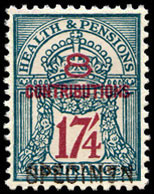
8x 2/2
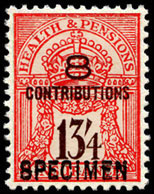
8x 1/8
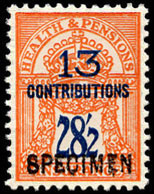
13x 2/2
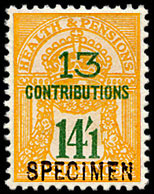
13x 1/1
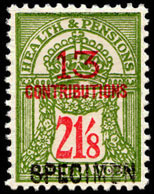
13x 1/8
13x 4d
September 1946 Issue
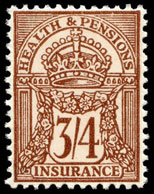
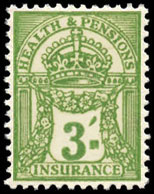
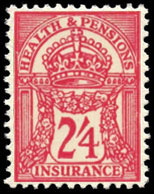
Health & Pensions stamps were replaced by National Insurance stamps when the National Insurance Act 1946 came into effect on 5 July 1948. However, in transition to the new scheme, the pension provisions of the Act were brought into effect on 30 Sept 1946 with substantially higher pensions supported by a significant increase in basic contributions to 4/- and 3/4, and new rate tiers for boys and girls (aged 16-17).
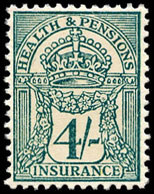
Exempt
Exempt
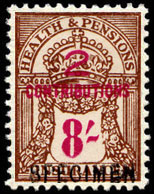
2x 4/-
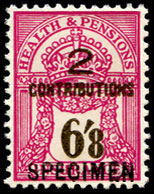
2x 3/4
2x 1/8
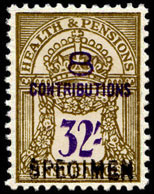
8x 4/-
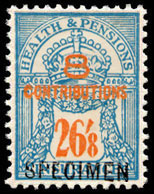
8x 3/4
8x 1/8
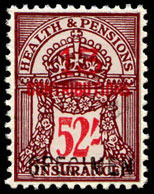
13x 4/-
13x 2/-
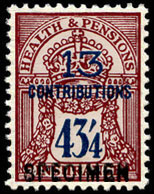
13x 3/4
13x 1/8
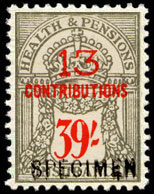
13x 3/-
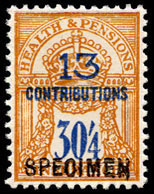
13x 2/4
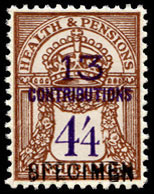
13x 4d
These stamps were discontinued on 5 July 1948, although remained on sale at post offices up to the end of 1948 for payment of arrears.
Issued in Rolls
| Rolls | Class E Woman | Class A Man | ||||
|---|---|---|---|---|---|---|
| Jan 1926 † | 11d | 480 | £22 | 1/4 | 480 | £32 |
| Jan 1926 ‡ | 1/1 | 480 | £26 | 1/6 | 480 | £36 |
| Jan 1936 | 1/2 | 480 | £28 | 1/8 | 480 | £40 |
| July 1940 | 1/5 | 480 | £34 | 1/10 | 480 | £44 |
| Jan 1942 | 1/7 | 480 | £38 | 2/- | 480 | £48 |
| Jan 1946 | 1/8 | 480 | £40 | 2/2 | 480 | £52 |
| Sept 1946 | 3/4 | 480 | £80 | 4/- | 480 | £96 |
† in Northern Ireland (until 6 July 1930)
‡ in Great Britain (and NI from 7 July 1930)
1934 HMSO
Waterlow’s contract expired on 31 Dec 1933 and printing of insurance stamps was transferred to HM Stationery Office. HMSO continued to use flat printing plates on Wharfedale printing machines for insurance stamps where the numbers required were relatively small, but the higher volume stamps were printed on Victory-Kidder rotary printing machines. Ten curved steel printing plates (each with 24 stamps) were mounted on a cylinder. Stamps were printed in sheets of 240 from the reel, perforated while the paper was stationary, then guillotined to size.