The National Insurance Act 1911 Part II, effective 15 July 1912, established unemployment insurance for some 2¼ million workers, primarily those engaged in manual labour. As with health insurance, contributions were paid by stamps affixed to contribution cards. The amount of the weekly contribution depended on the number of days worked, initially as in the simplified table below.
| Workman | Rate |
|---|---|
| Man weekly | 5d |
| Man 2 days | 4d |
| Man 1 day | 2d |
| Boy | 2d |
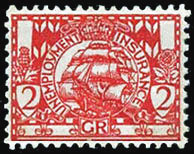
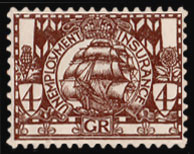
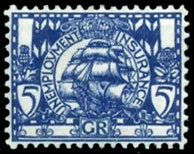
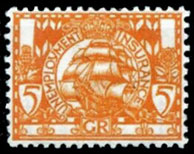
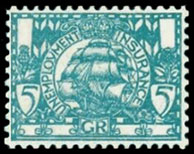
November 1920 Issue
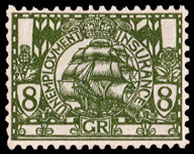
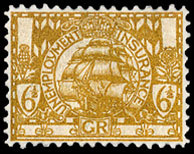
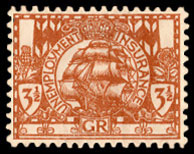
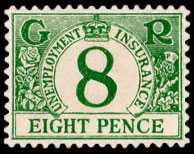
The Unemployment Insurance Act 1920, effective 8 Nov 1920, covered about 11 million workers, significantly expanding the previous scheme. It differentiated between men and women, and provided exemptions for certain workers. Contributions were, of course, increased, requiring three new stamps: 3½d, 6½d, and 8d.
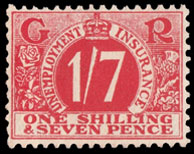
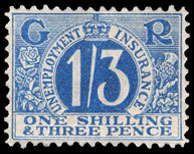
The 1920 Act was passed during a period of low unemployment, but its costs soared during the high unemployment of 1921, leading to amendments. The Unemployment Insurance (No. 2) Act 1921, effective 4 July 1921, increased basic rates to 1/3 and 1/1, and then the Unemployed Workers’ Dependants (Temporary Provision) Act 1921, effective 7 Nov 1921, increased them to 1/7 and 1/3.
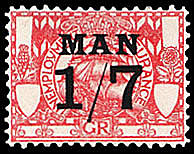
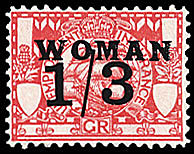
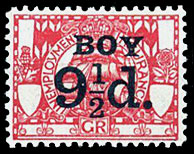
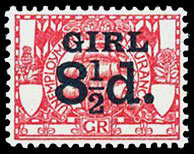
April 1922 Issue
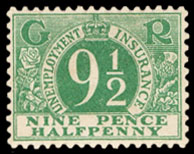
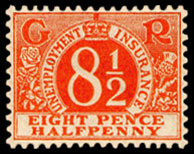
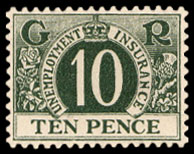
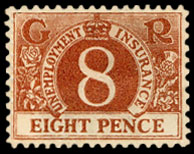
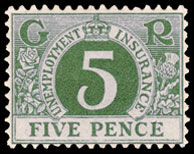
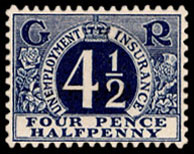
The Unemployment Insurance Act 1922, effective 6 Apr 1922, combined contributions and benefits from the Unemployment Insurance Acts with the Unemployed Workers’ Dependants (Temporary Provision) Act.
January 1926 Issue
To align with Health & Pensions, the Unemployment Insurance Act 1925, effective 4 Jan 1926, lowered the unemployment insurance contributions to 1/3 for men and 1/1 for women.
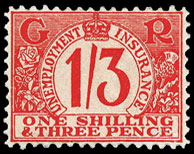
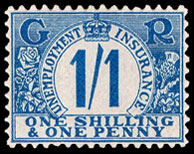
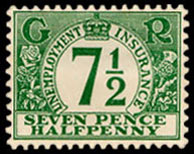
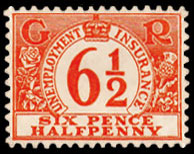
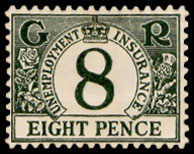
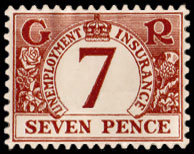
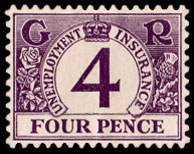
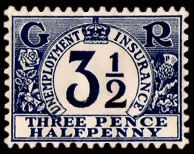
There were no high value 2x 7½d and 2x 6½d stamps as the single rate 1/3 and 1/1 stamps could be used instead.
2 weeks
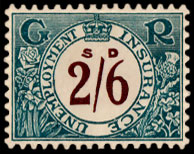
2x 1/3
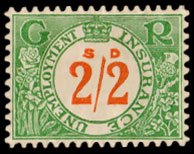
2x 1/1
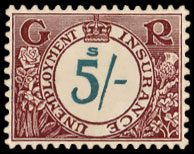
4x 1/3
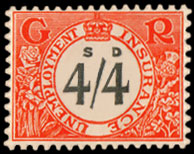
4x 1/1
4x 7½d
4x 6½d
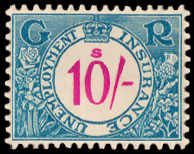
8x 1/3
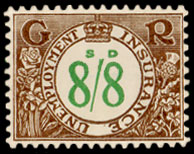
8x 1/1
8x 7½d
8x 6½d
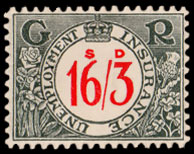
13x 1/3
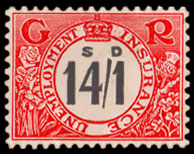
13x 1/1
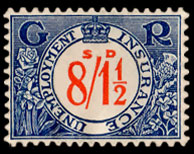
13x 7½d
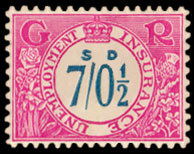
13x 6½d
The Unemployment Insurance Act 1927, effective 2 July 1928, introduced new rate tiers for young men and women (aged 18, 19, or 20). The rate for a young man was 1/1 (7d exempt), the same as the woman’s rate so no new stamps were required. The rate for a young woman was 11d (6d exempt) which did require new stamps.
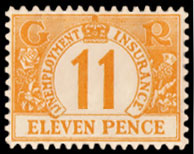
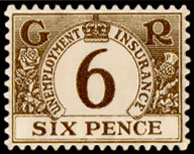
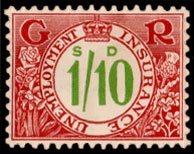
2x 11d
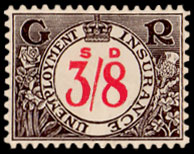
4x 11d
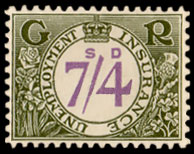
8x 11d
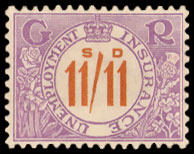
13x 11d
October 1931 Issue
The Unemployment Insurance (National Economy) Order 1931, effective 5 Oct 1931, increased rates across the board. Provisional stamps were issued in time for the rate change by overprinting the existing high value design with denominations in black.
Young Man
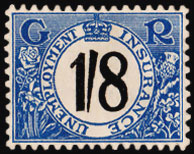
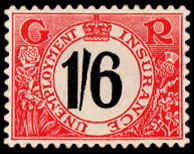
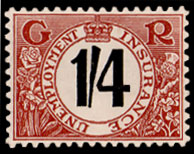
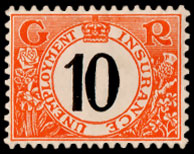
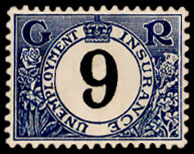
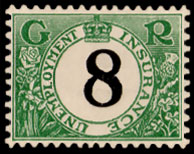
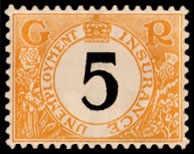
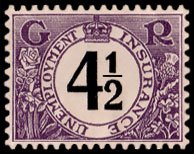
Definitive stamps replace the provisional ones from Nov/Dec 1931.
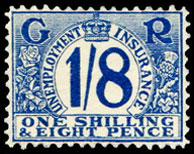
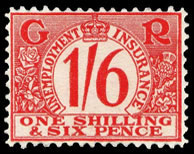
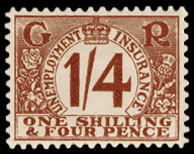
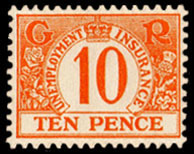
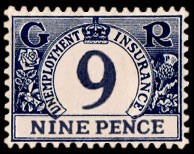
High Values were available from mid-December 1931. There were no high value 2x 10d and 2x 9d stamps as the single rate 1/8 and 1/6 stamps could be used instead.
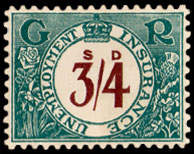
2x 1/8
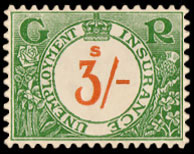
2x 1/6
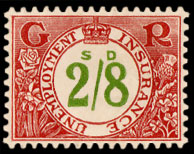
2x 1/4
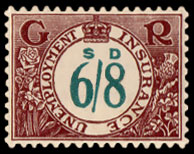
4x 1/8
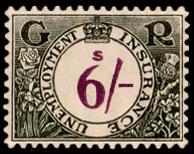
4x 1/6
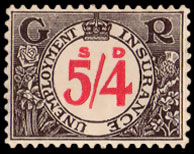
4x 1/4
4x 10d
4x 9d
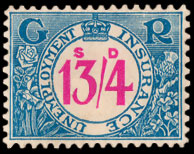
8x 1/8
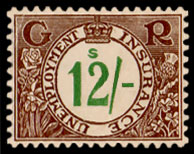
8x 1/6
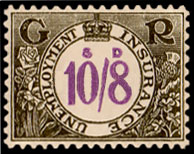
8x 1/4
8x 10d
8x 9d
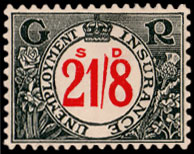
13x 1/8
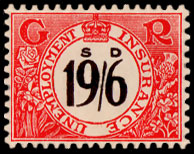
13x 1/6
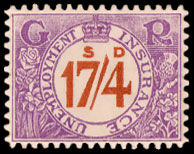
13x 1/4
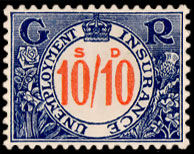
13x 10d
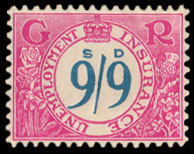
13x 9d
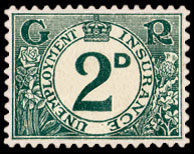
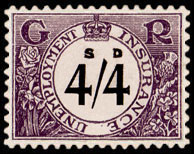
The Unemployment Act 1934, effective 3 Sept 1934, extended insurance to juveniles aged 14-15. The rate for both boys and girls was 4d (2d exempt). A 4/4 stamp (13x 4d) is known but unlisted in file PIN 10/6.
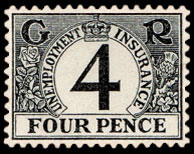
July 1936 Issue
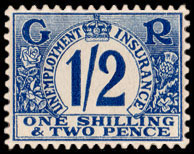
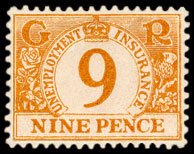
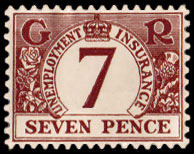
The Unemployment Insurance (Reduction in the Weekly Rates of Contributions) Order 1936, effective 6 July 1936, reduced basic rates for adults 18+ by 2d (1d exempt). The rates for boys and girls (16-17) and juveniles (14-15) were unchanged.
Young Man
August 1940 Issue
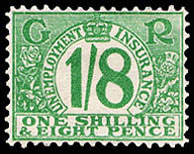
The Unemployment Insurance Act 1940, effective 5 Aug 1940, returned rates to the 1931 levels, where they stayed until replaced by National Insurance stamps in 1948.
Young Man
Wide Format Stamps
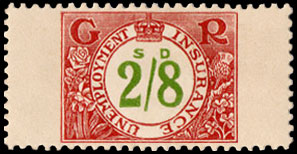
In 1934, it was noted that high value stamps were often confused with ordinary stamps and counted as single contributions instead of multiple contributions. Of particular concern were the 1/6 and 19/6 which often appeared together and could easily be mis-counted. A solution was proposed to print the existing designs on paper twice the width of ordinary stamps. HMSO replied on 24th August that “owing to the limited throw of the perforating machine it is not possible to obtain the double size”. The final size was 50% wider, i.e. two high value stamps were the same width as three ordinary stamps. New stamps were issued from 17 June 1935.
2x 1/4
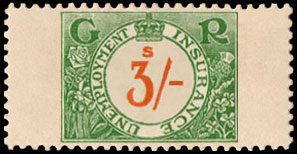
2x 1/6
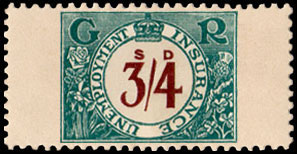
2x 1/8
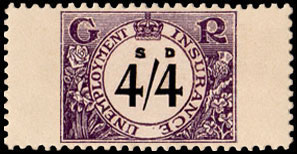
13x 4d
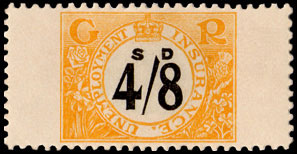
4x 1/2
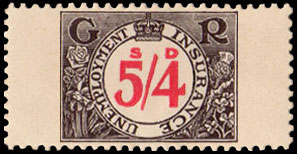
4x 1/4
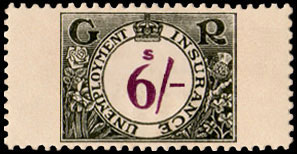
4x 1/6
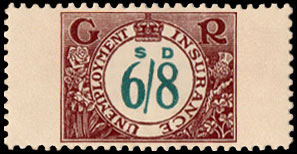
4x 1/8
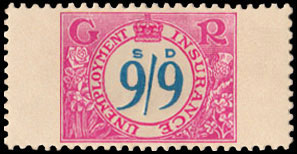
13x 9d
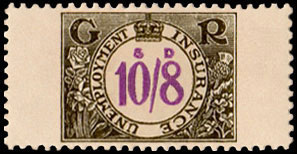
8x 1/4
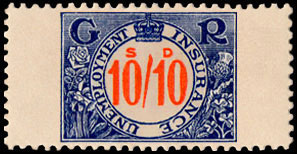
13x 10d
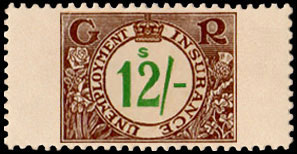
8x 1/6
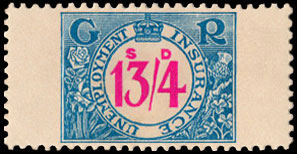
8x 1/8
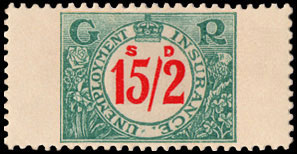
13x 1/2
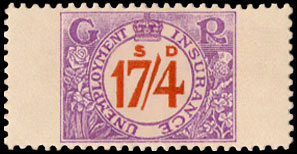
13x 1/4
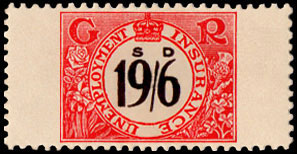
13x 1/6
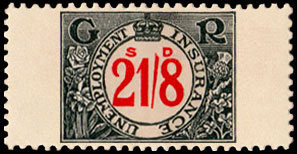
13x 1/8
Full-width designs including a new 9/4 stamp (8x 1/2) were issued from 19 June 1939. However, late in 1939 the issue of high value stamps was suspended because of the war.
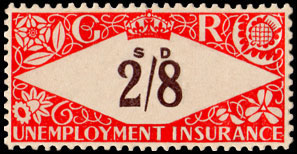
2x 1/4
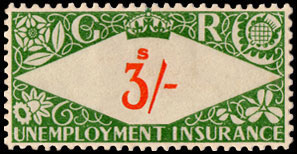
2x 1/6
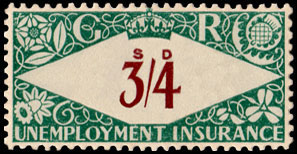
2x 1/8
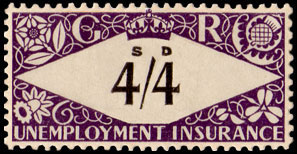
13x 4d
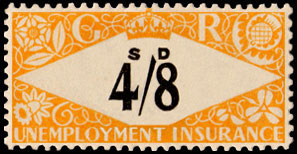
4x 1/2
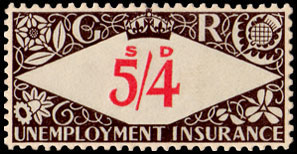
4x 1/4
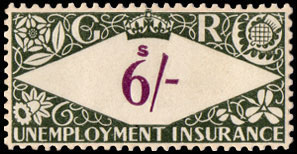
4x 1/6
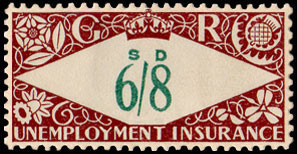
4x 1/8
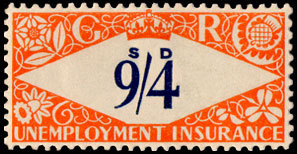
8x 1/2
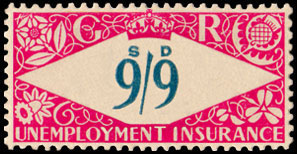
13x 9d
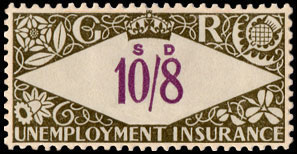
8x 1/4
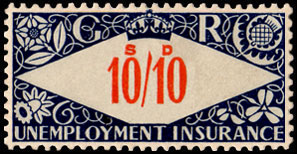
13x 10d
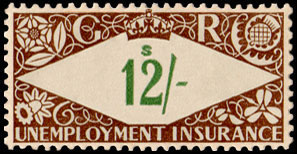
8x 1/6
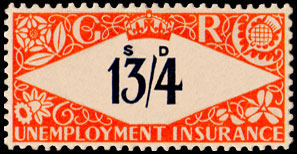
8x 1/8
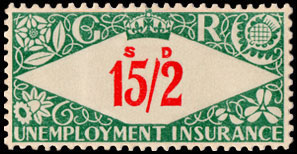
13x 1/2
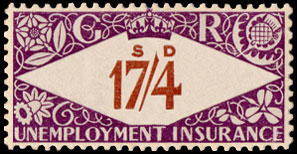
13x 1/4
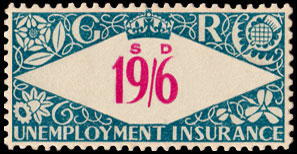
13x 1/6
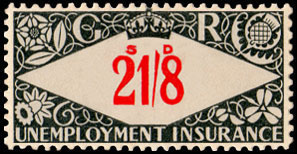
13x 1/8
Unemployment Insurance stamps were replaced by National Insurance stamps when the National Insurance Act 1946 came into effect on 5 July 1948, although remained on sale at post offices up to the end of 1948 for payment of arrears.