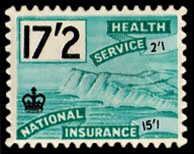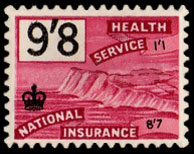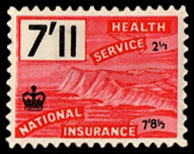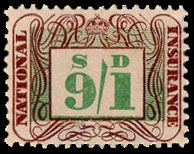
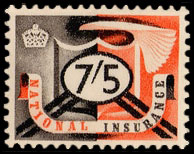
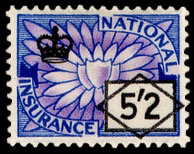
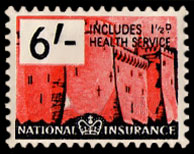
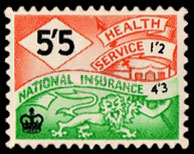
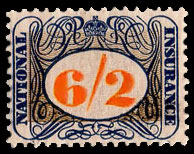
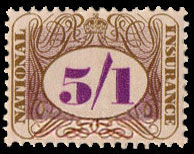
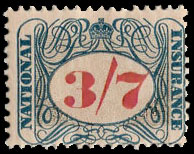
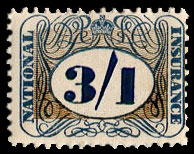
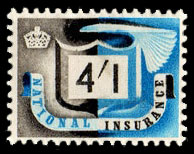
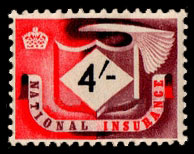
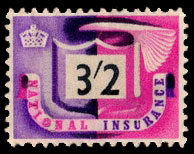
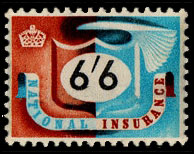
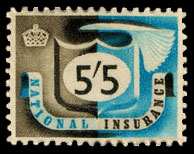
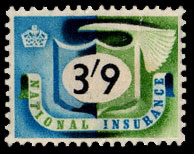
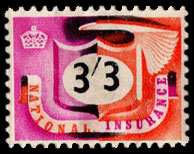
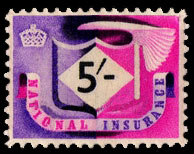
The alphabetical classes of the previous system were replaced by numerical classes: Class 1 (employed), Class 2 (self-employed), and Class 3 (non-employed) when the National Insurance Act 1946, the National Insurance (Industrial Injuries) Act 1946, and the National Health Service Act 1946 came into effect on 5 July 1948. Stamps for Class 1 contributions had the value in a rectangle, for Class 2 in an oval, and for Class 3 in a diamond. Special rates for Mercantile Marines were added in Dec 1950.
Rates were the sum of contributions for National Insurance, Industrial Injuries, and National Health Service (NHS), each paid partly by the employee and partly by the employer. For example, an employed man at 9/1:
| National Insurance | Industrial Injuries | NHS | Total | |
| Employee | 3/10½ | 4d | 8½d | 4/11 |
| Employer | 3/8½ | 4d | 1½d | 4/2 |
| Total | 7/7 | 8d | 10d | 9/1 |
Employed Abroad rates excluded employee & employer Industrial Injuries contributions. Exempt rates (men or women over retirement age, married women or girls opting out) excluded employee NI & NHS contributions. Abroad & Exempt rates excluded all of those, leaving only the employer NI & NHS contribution.
There were 811 stamps issued between 1948 and 1993.
First Issue
Date: 5 July 1948 – 30 Sept 1951
Designer: Victor Reinganum
Printer: HM Stationery Office
Process: Letterpress
Watermark: Block MNI
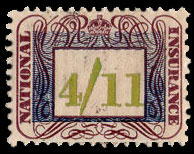
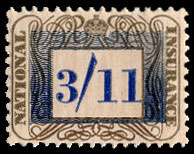
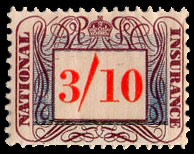
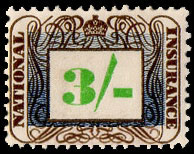
The first issue of National Insurance stamps was on 5 July 1948 – the day that the 1946 legislation came into effect. Initially, there were 25 stamps for 26 rates: the rate for a Girl Abroad & Exempt (woman under 18, married, working abroad) was 1/9 but no stamp was issued for this rate. (Leaflet N.I.38A recommended that a 3/6 stamp be affixed every other week.) Three special rates for Mercantile Marines were issued on 8 Dec 1950 for a man 18 to 70 and not retired, a boy under 18, and an exempt man (over 65 and retired, or over 70), making 28 stamps for 29 rates.
Employed
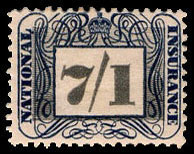
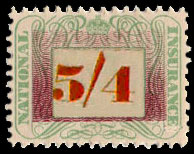
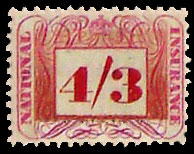
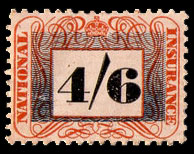
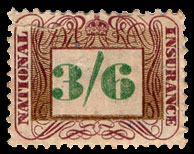
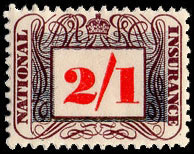
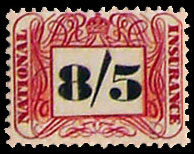
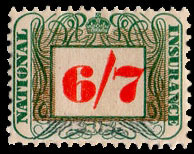
Self-employed
Non-employed
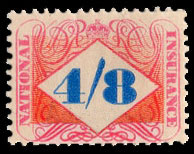
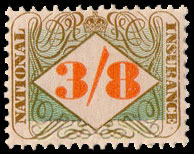
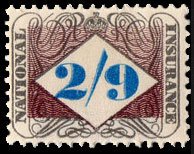
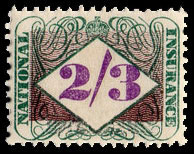
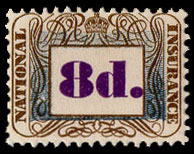
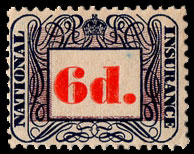
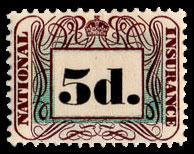
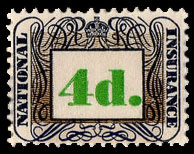
8 Dec 1950
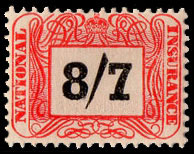
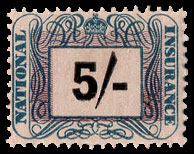
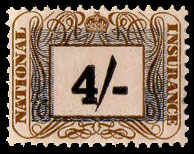
Later Printings
From mid-1949, some stamps were reprinted with simple black values instead of colourful curvy values. Presumably, these were easier to read. Dates are from file PIN 10/24 which also contains a note referring to technical printing difficulties with values printed in green.
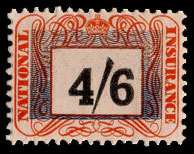
30 June 1950
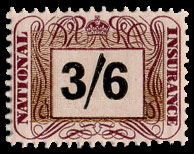
26 Jan 1951
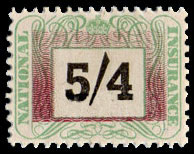
23 Dec 1949
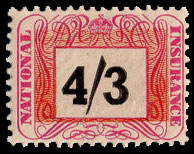
21 Oct 1949
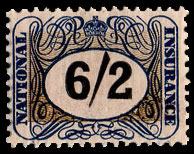
27 July 1950
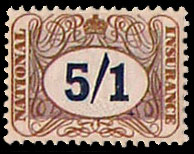
1 Aug 1951
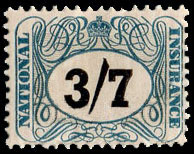
12 Sept 1950
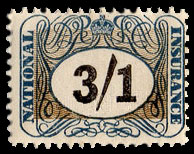
12 Sept 1950
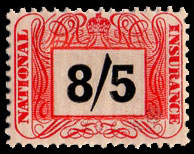
21 June 1949
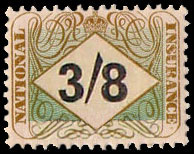
30 Sept 1949
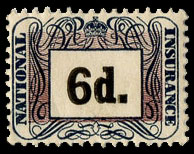
15 Aug 1950
October 1951 Issue
Date: 1 Oct 1951 – 5 Oct 1952
Printer: HM Stationery Office
Process: Photogravure
Watermark: Block MNI
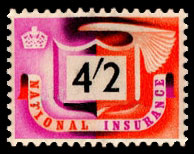
After large-scale forgery of the first letterpress stamps in 1950, HMSO installed new machinery so that subsequent issues could be printed in photogravure, making forgery more difficult. The left and right halves of each stamp were in different colours. There were 27 stamps for 29 rates: the rates for a Class 1 Abroad & Exempt Man and for a Class 3 Woman were both 4/- so shared a stamp (with a diamond), and the rate for a Girl Abroad & Exempt was 1/10 but no stamp was issued.
Employed
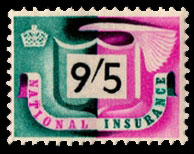
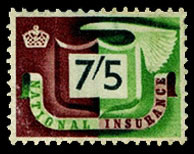
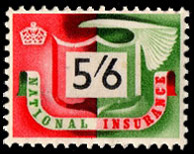
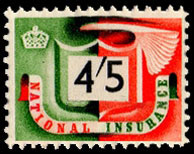
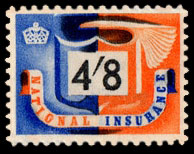
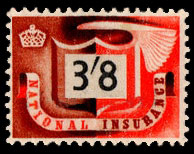
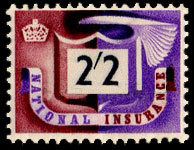
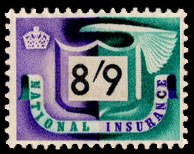
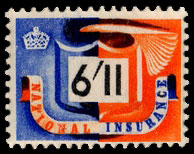
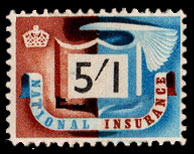
Self-employed
Non-employed
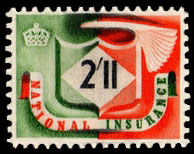
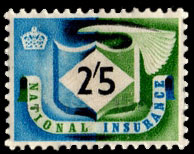
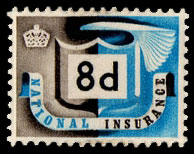
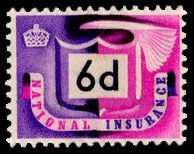
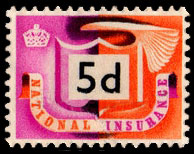
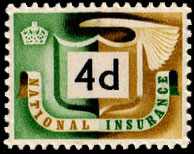
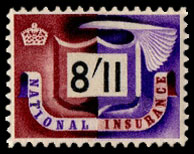
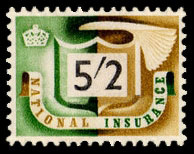
October 1952 Issue
Date: 6 Oct 1952 – 5 June 1955
Printer: HM Stationery Office
Process: Photogravure
Watermark: Block MNI
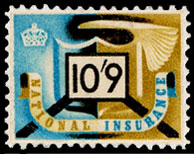
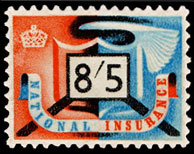
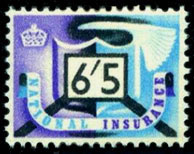
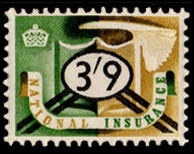
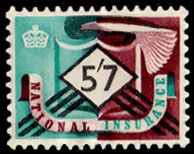
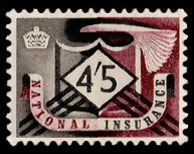
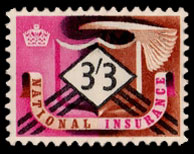
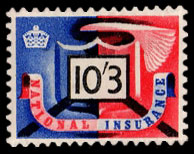
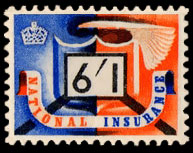
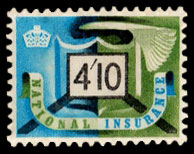
The 1952 issue kept the same design as before but with diagonal lines in the bottom half of the stamps. There was a single black line for Class 1, a double line for Class 2, and a triple line for Class 3. There were 27 stamps for 29 rates: two Industrial Injuries rates were 6d so shared a stamp, and the rate for a Girl Abroad & Exempt was 2/2 but no stamp was issued.
Employed
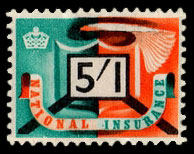
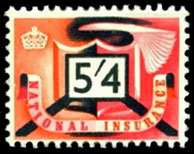
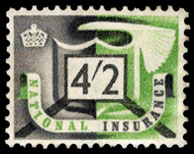
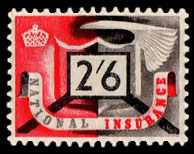
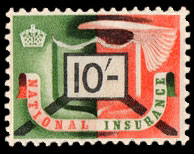
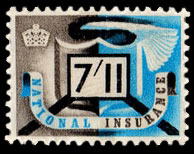
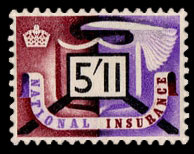
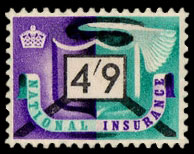
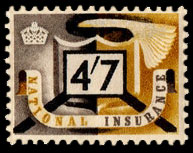
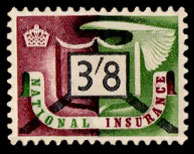
Self-employed
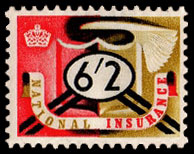
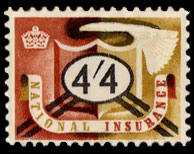
Non-employed
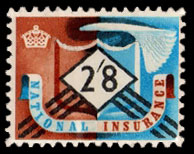
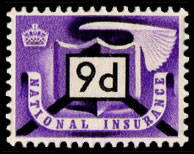
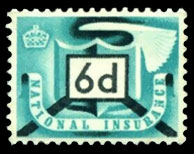
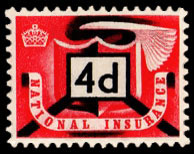
June 1955 Issue
Date: 6 June 1955 – 1 Sept 1957
Printer: HM Stationery Office
Process: Photogravure
Watermark: Block MNI
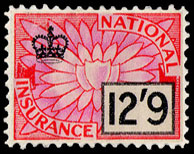
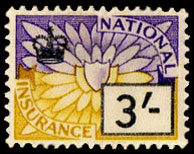
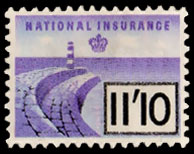
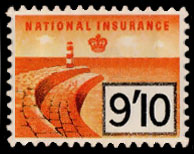
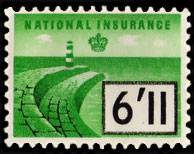
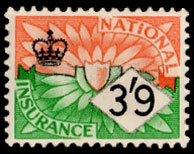
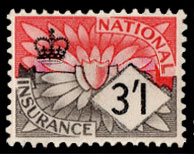
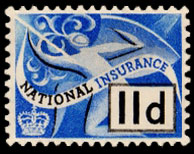
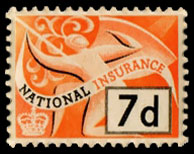
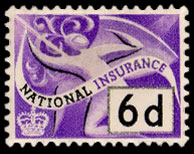
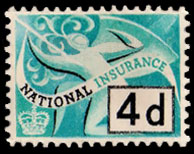
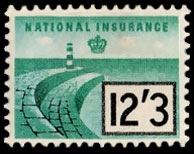
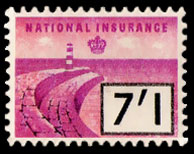
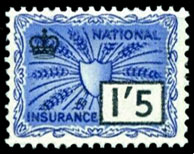
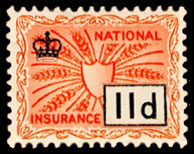
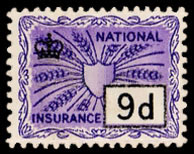
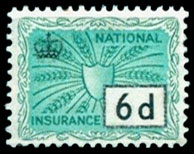
After the abstract designs of the previous issue, the 1955 stamps were pictorial. The flower design had a crown printed in black, others had a crown as part of the colour printing. There were 27 stamps for 29 rates: the rates for a Class 1 Exempt Woman and for a Class 3 Woman were both 5/2 so shared a stamp (with superimposed rectangle and diamond), and the rate for a Girl Abroad & Exempt was 2/8 but no stamp was issued.
Employed
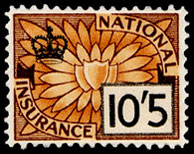
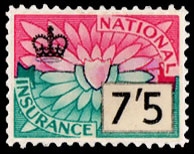
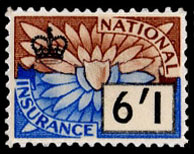
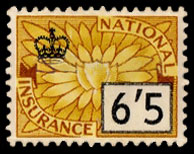
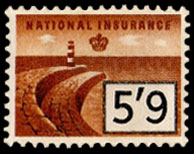
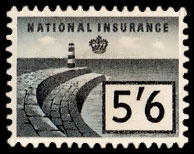
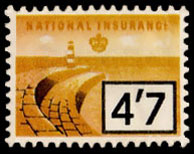
Self-employed
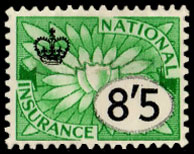
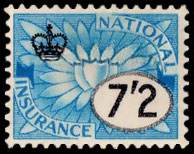
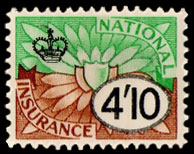
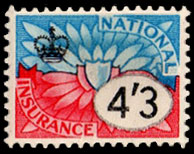
Non-employed
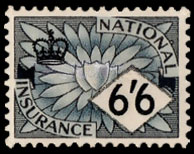
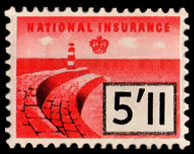
September 1957 Issue
Date: 2 Sept 1957 – 2 Feb 1958
Printer: HM Stationery Office
Process: Photogravure
Watermark: Block MNI
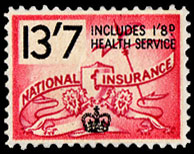
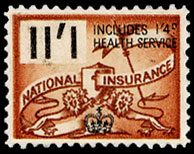
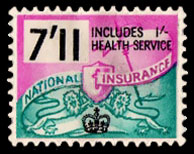
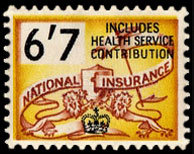
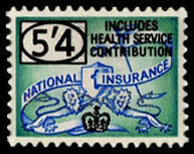
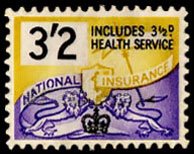
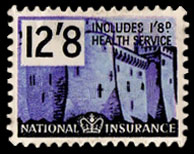
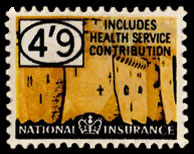
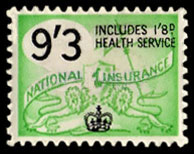
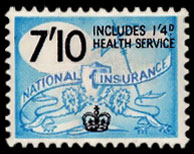
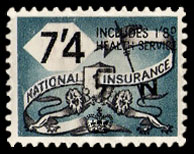
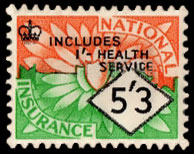
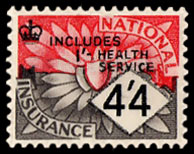
New designs were used for the 1957 issue, mostly following the same colour scheme as before, and overprinted “Includes Health Service”. There were only 21 stamps for 29 rates: three rates had double duty (6/7, 5/4, 4/9), the four Industrial Injuries rates were unchanged so used the previous stamps, and the rate for a Girl Abroad & Exempt was 2/10 but no stamp was issued.
Employed
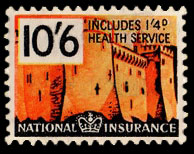
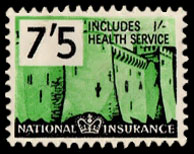
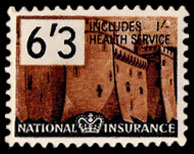
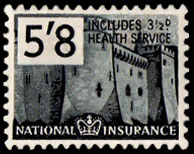
Self-employed
Non-employed
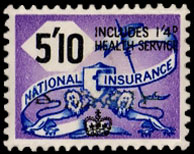
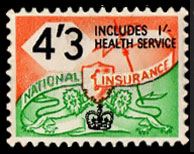
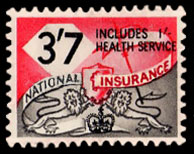
(unchanged)
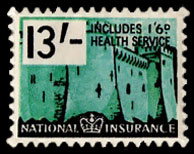
February 1958 Issue
Date: 3 Feb 1958 – 6 July 1958
Printer: HM Stationery Office
Process: Photogravure
Watermark: Block MNI
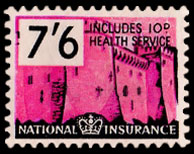
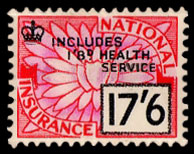
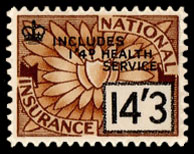
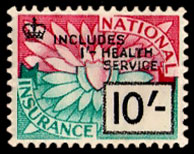
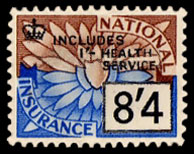
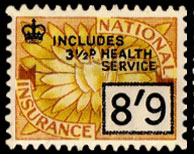
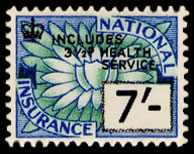
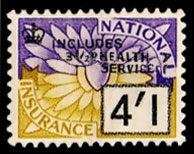
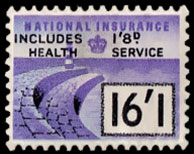
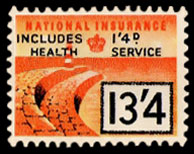
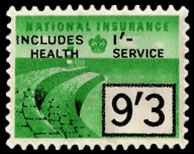
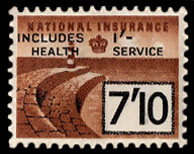
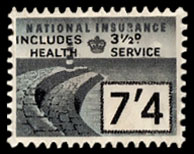
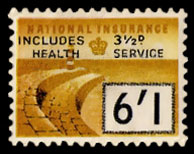
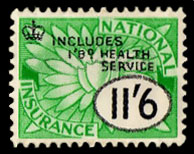
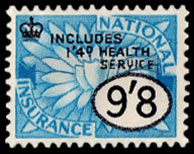
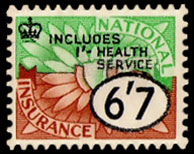
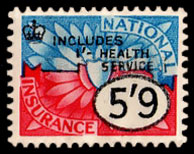
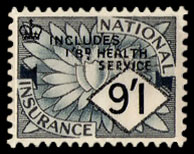
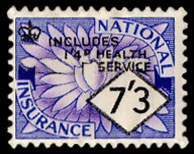
The Feb 1958 stamps reused the designs from 1955 but overprinted “Includes Health Service”. There were 27 stamps for 29 rates: the rates for a Class 1 Girl Abroad and for a Mercantile Marine Exempt were both 7/10 so shared a stamp, and the rate for a Girl Abroad & Exempt was 3/7 but no stamp was issued.
Employed
Self-employed
Non-employed
July 1958 Issue
Date: 7 July 1958 – 2 Apr 1961
Printer: HM Stationery Office
Process: Photogravure
Watermark: Block MNI
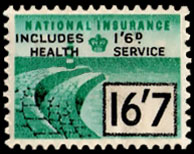
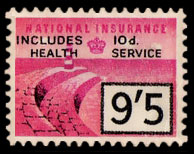
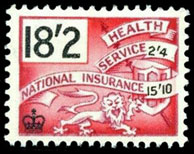
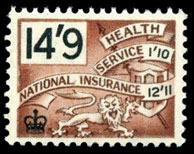
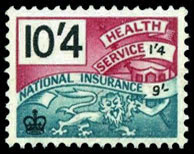
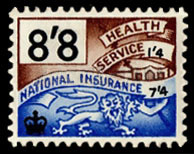
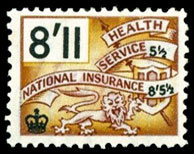
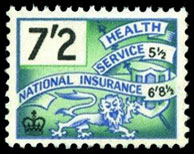
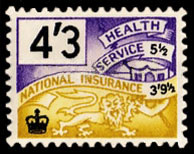
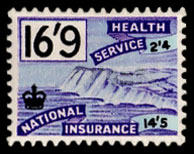
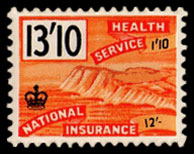
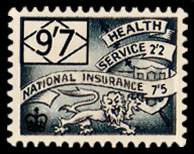
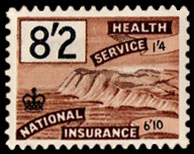
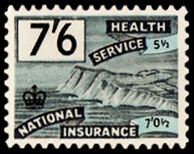
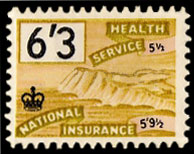
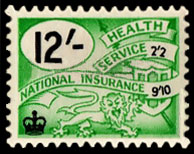
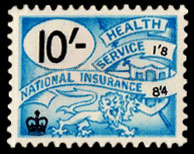
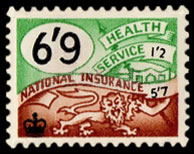
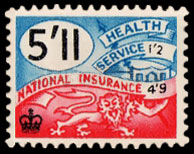
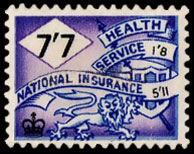
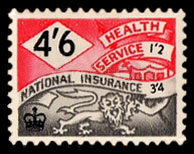
July 1958 saw the second issue of the year, this time with “Health Service” as part of the design and only the value overprinted. There were 23 stamps for 29 rates: the rates for a Class 3 Man and for a Boy Abroad were both 9/7 so shared a stamp (with superimposed rectangle and diamond), the four Industrial Injuries rates were unchanged so used the previous stamps, and the rate for a Girl Abroad & Exempt was 3/9 but no stamp was issued.
Employed
Self-employed
Non-employed
(unchanged)